
Pelvic Floor Health: Why Pressure Matters More Than Strength
You've had a bustling full life in your 20s, 30s, and 40s. You've maybe had a child or several. You fluctuate between feeling like you do everything and should be doing more. Your body is different than it used to be. Maybe you have a pooch, pee when you laugh, or have a gnarly prolapse and wonder "How the hell did I get here?" or "Why are none of these practices or protocols working?"
I've had many of those thoughts. “How is it that I'm a somatic bodyworker and I'm not healing?” But here is what I've learned over 25 years of studying and working with bodies: nothing helps if we don't address the pressure system of our bodies.
The pelvic floor lives at the bottom of this pressure system, the breath regulates it, and our fascial network is where it lives, flows, gets stuck and wreaks havoc. You can isolate and strengthen what's weak and even release what's tight, but if the way you move pressure through your body doesn't shift, neither will your pelvic floor dysfunction.
What the pelvic floor actually is?
Your very famous pelvic floor, which you've been told will be fabulous as long as you do your Kegels, is more like a spring and less like a floor. It's a diaphragm. It breathes as you breathe, and it reacts as you rebound with every step. Its intricate design creates a hammock of love for your organs, your uterus, your ovaries and bladder. A buoyancy of support.
This hammock is woven with fascia, the network of fibrous tissue that wraps and weaves around and through your muscles. Your fascia is also responsible for your bounce and rebound.
Picture this. Underneath your rib cage lives your diaphragm, a big canopy that hovers above your abdominal cavity on your exhale, and on your inhale moves down and massages your organs and pelvic floor. Your abdominal walls live toward the front of your body. Your deep spinal muscles live behind. Your pelvic floor or diaphragm lives below. These four breathing walls become a magnificent pressure container.
When in balance, the inhale creates healthy pressure, massaging the goods, and the exhale creates a pressure release — the pelvic floor gently engages, nourishing your organs from below. An ongoing pressure system of massage for your viscera. Whoever designed this was a genius.
What creates healthy balance in this container depends on how you move, how you sit, how you talk, sing, dance, sleep and eat. Everything.
How pressure dysregulates
You can imagine your container now. You're probably sitting. Notice how much pressure falls through your abdominal cavity as you sit. Depending on how you sit, and for how long, patterns begin to form in the container. If you're a little slumped and your front ribs push down into your belly, the front of your diaphragm and abdominal tissue gets tight. The back line, directly behind the slump, becomes weaker, less springy.
Remember that fascia, the network of tissue that brings spring, elasticity and healthy tension throughout your body? It gets rigid from unbalanced movement and funky postural positioning. Now you have a container that is no longer balanced. Tight in the front, overstretched in the back. Squished. Pressure moves downward into your organs and pushes into the bottom of this system; your pelvic floor.
The tightness creates a pattern where pressure is consistently pushed downward, even when you're trying to stand tall, because your fascia and muscle have become tense beyond being able to maintain a lift. The full breath system that helps regulate pressure is now compromised because your diaphragm is stuck and tight. To get a full inhale, other muscles overwork. Maybe your chest and neck muscles compensate, and that tension creates more downward pressure. Your exhale is less of a lengthened release and more of a collapse. Maybe you've begun to move less because you're in pain, and movement is what hydrates your fascia. The spiral continues. The pressure grows. This is one of many examples. Dysfunction and pain arise from postural patterns, injury, trauma, surgery, scar tissue, biochemical and nutritional imbalances.
In simplest terms: how you sit, breathe, stand, move and nourish your body greatly affect your pressure system.
Why kegels alone often fall short
You may already understand why Kegels do very little, or make symptoms worse, now that you can picture your pressure system. Rather than working from the root of the dysfunction, Kegels address only the weakness, which is a result of the pressure. They will increase muscle tone but do nothing for the continuous pressure being pushed through and down into your body, into that beautiful container.
Similarly, for those with hernias, disc herniations and many other physical injuries, pressure is the root of the issue. When there is constant pressure within a closed container, something has to give. Pressure is the root cause.
Often those with pelvic pain or discomfort have too much tone in the pelvic floor tissue from overcompensation — the body trying to hold it together. In those cases, Kegels are especially the wrong exercise. And similarly, those with hernias and disc bulges, strengthening the core increases intra-abdominal pressure, and often those muscles are tight from overcompensation as well. The faulty pressure pattern must be addressed first.
Healing happens when you listen to the signals your body is giving you and look toward healing at the root, not just the symptom. Kegels might temporarily tone your pelvic tissue and even pause your urinary incontinence for a while, but eventually pressure wins.
The Somatic Approach: Listening Before Strengthening
My approach with any body always begins with listening and awareness. This might sound basic, but when you tune in to your body's signals there is a wealth of information.
Once you notice how pressure is moving or not moving through your body, where you hold, where tension lives, and how your breath flows or doesn't flow, you have a foundation to build upon.
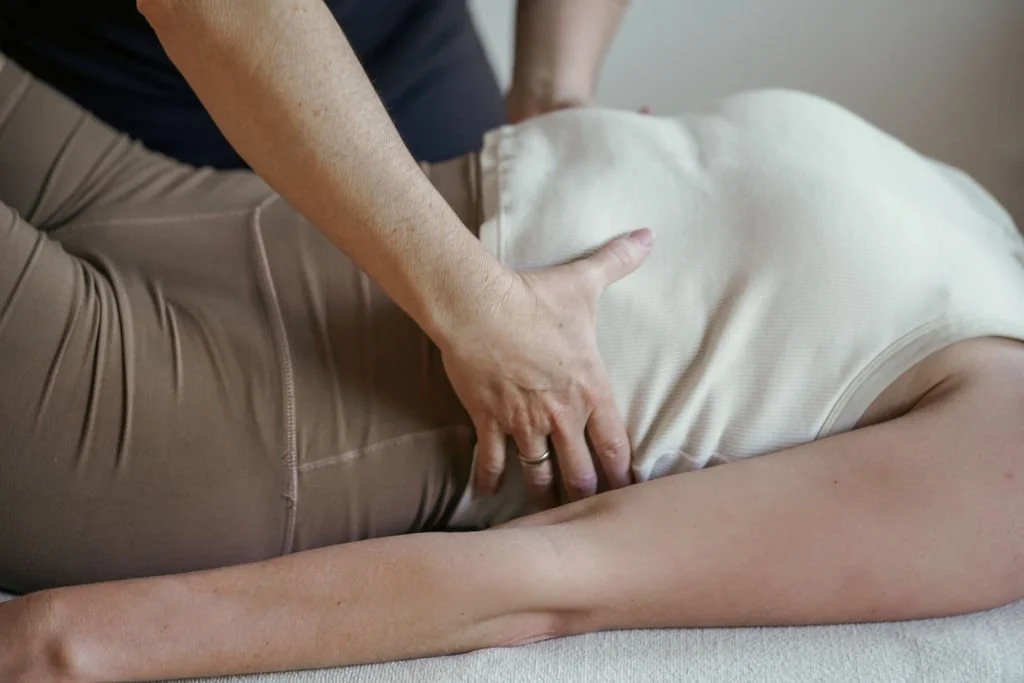
Can you begin to breathe more balanced? What is creating tension while you inhale? This is where you begin to undo and unravel through fascial bodywork, scar tissue release and dynamic fascial lengthening. You observe — is your breath more balanced? These tools begin the re-patterning process so your body learns a new way of moving, breathing and posturing. Strengthening begins during the re-patterning phase and continues as you begin to integrate. The last and ongoing step is integrating your new patterns, new way of being, and new beliefs into your daily life.
One Foundational Practice
The simplest place to begin is Breath Mapping — a short practice that shows you where your tension lives and how your pressure system is moving. You start by lying down and observing how you breathe, where you breathe, and what tension patterns are recurring on each breath cycle. It's a way to notice how you are being, before you begin any doing.
Now you have a clearer understanding of what might be going on in your body. Your body that has done so much throughout your life and still longs to feel vital and free. The freedom, vitality and strength are here for you. They live just beyond the first step of listening, observing and shifting your relationship with pressure.